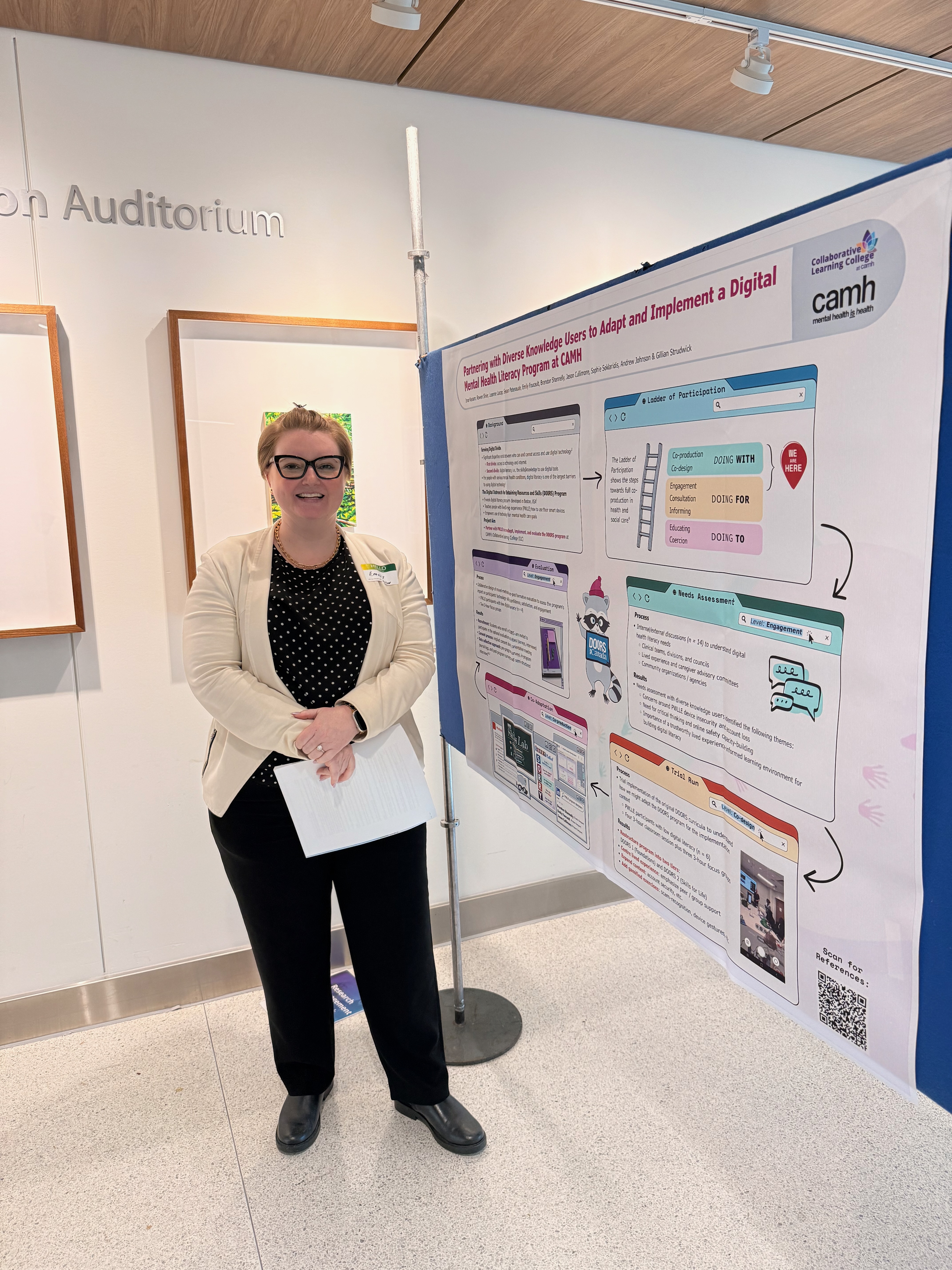
Closing the digital-health gap through co-design: turning a technical curriculum into accessible, practical learning shaped by the people it was intended to serve.
Emily Foucault presenting at CAMH Research Engagement Day in Toronto, 2026.
01
Context
What shaped the work
Access to technology does not guarantee meaningful access to care. People living with mental health challenges also need the confidence, skills and support to use devices, online services and digital-health resources.
DOORS was originally developed through Harvard Medical School and Beth Israel Deaconess Medical Center. The Canadian project set out to adapt it for CAMH's Collaborative Learning College and the realities of its community.
02
Emily's role
Where Emily contributed
Emily served as a course designer and lived-experience collaborator. She helped shape the brand direction, detailed facilitator outlines, presentations, handouts and game-based learning experiences while maintaining consistency across the program.
03
Collaborative process
How the work happened
CAMH's Digital Mental Health Lab, Collaborative Learning College, researchers, educators, developers, community partners and people with lived and living experience worked together to create a local adaptation rather than simply importing the original curriculum.
04
Contribution
From insight to action.
Translated technical digital-health concepts into plain, accessible language.
Applied trauma-informed considerations to the classroom experience.
Brought personality and warmth to material that had previously felt procedural.
Developed practical course outlines, presentations and learner handouts.
Helped conceptualize a safe practice environment for swiping, tapping and zooming without fear of breaking technology.
Kept the learning experience grounded in confidence, access and real-world use.
05
Output
What resulted
The work produced a Canadian adaptation of DOORS delivered through CAMH's Collaborative Learning College, supported by facilitator materials, learner resources, interactive experiences and a mixed-methods pilot evaluation.