Patient Voice & Systems Change
OpenNotes in Canada: Access, Equity and Patient Partnership
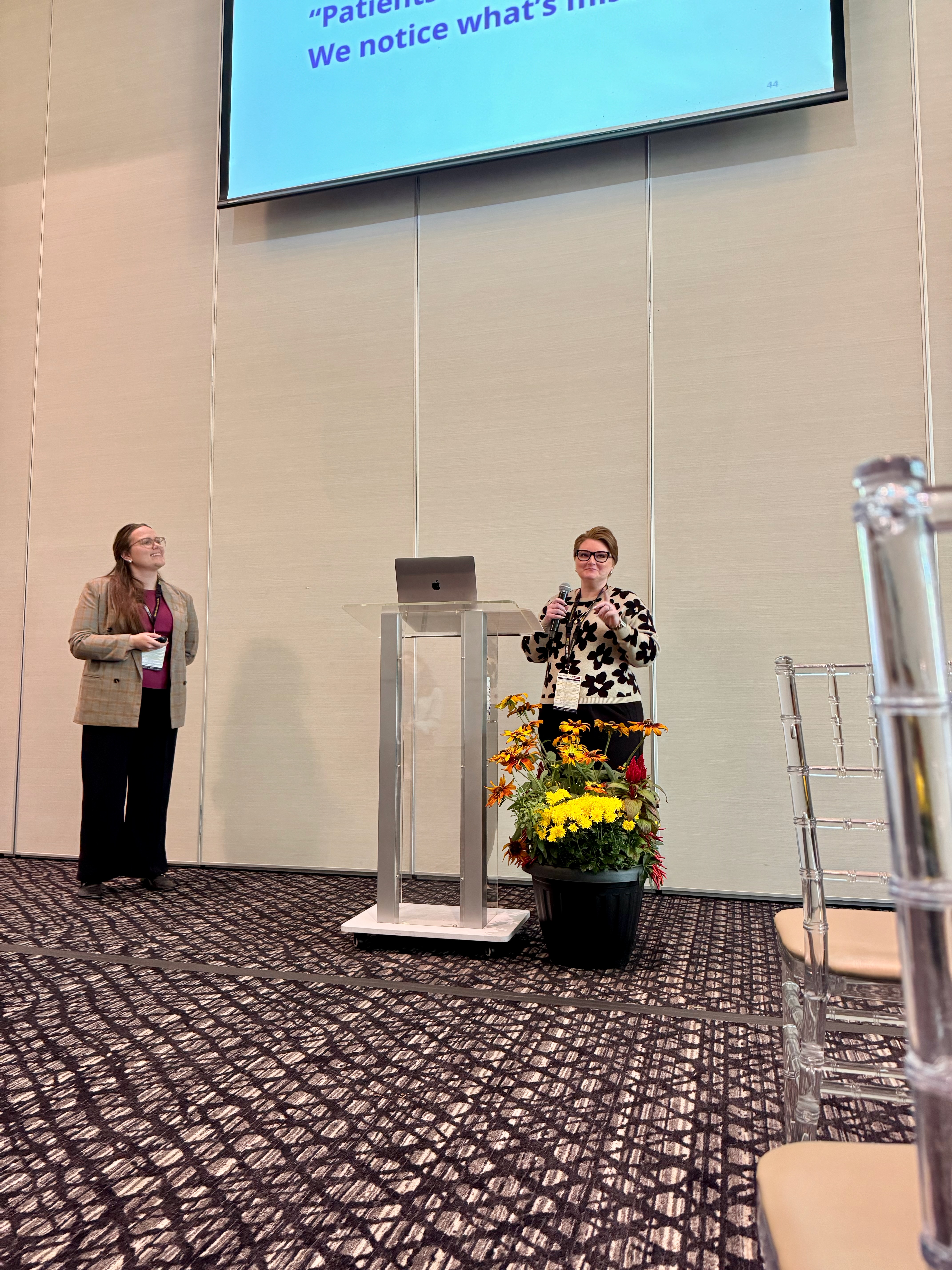
At the 2025 UHN PiPER Research Conference, I spoke about a deceptively simple idea: people should be able to read the notes written about their own health.
The day brought together people committed to patient engagement and equity-focused research. What stayed with me was not a particular framework or statistic. It was the difference between inviting patients into a room and giving them meaningful power once they are there.
That distinction is at the heart of OpenNotes.
What are open notes?
An open note is a clinical note that a patient can access, usually through a secure online portal. Notes document how a clinician understood an appointment: what was discussed, what they observed, their assessment and what should happen next.
For people navigating complex or chronic conditions, those details matter. Medical appointments are short. The language can be unfamiliar. When several symptoms, medications or referrals are involved, it is easy to leave an appointment unsure of what was decided.
Before I had access to my notes, I often went home trying to reconstruct what I thought I had heard. I would search medical terms from memory and hope I had understood them correctly. Reading the note after an appointment changed that experience. I could see the clinician’s interpretation, review next steps and arrive at the next conversation better prepared.
Access did not make me less trusting or more adversarial. It helped me participate.
From confusion to clarity
OpenNotes is an international movement focused on transparent communication among patients, care partners and clinicians. Research and implementation work has connected access to notes with better recall, stronger understanding of care plans, increased patient involvement and opportunities to identify errors.
Those benefits do not mean every note will be easy to read. Clinical jargon can create distance. In mental health settings, stigmatizing or imprecise language can cause real harm. Notes may also contain sensitive information that requires thoughtful privacy practices.
These challenges are not reasons to keep patients in the dark. They are reasons to document with greater clarity and care.
In Canada, access remains inconsistent. Some institutions provide useful patient portals, while others offer only partial information or require people to make formal requests. Access to mental health notes can be especially limited. The result is a patchwork in which a person’s ability to understand their own care depends on where they receive it.
Patient partnership must be more than consultation
Through my work with CAMH’s Digital Mental Health Lab, I have seen what becomes possible when patients and caregivers help shape research rather than simply respond to it.
Patient partners notice different things. We ask whether a process will make sense when someone is exhausted, frightened or cognitively overwhelmed. We recognize language that may be technically familiar to a clinician but alienating to the person being described. We can identify the gap between a policy that looks accessible and an experience that actually feels accessible.
That contribution is expertise.
My role is not to approve a finished idea because a patient voice is needed at the end. It is to ask questions early, challenge assumptions and help translate abstract plans into the realities of receiving care.
At PiPER, I described OpenNotes as more than a technology solution. It is a trust solution. When people have experienced medical dismissal, trauma or a long diagnostic journey, transparency can help shift the relationship from decisions made about them to decisions made with them.
Language is part of care
A clinical note is not merely administrative. It can influence how the next clinician understands a person and how that person understands themself.
Compassionate documentation does not mean avoiding clinical precision. It means choosing accurate, respectful language; explaining uncertainty; distinguishing observation from assumption; and remembering that the person described may read every word.
When notes are clear, patients can ask better questions. When patients can identify missing or inaccurate information, records can become safer. When clinicians and patients work from the same information, the conversation becomes more equal.
From a seat at the table to shared ownership
There was a time when I wondered whether telling my story inside large systems could make any difference. Patient partnership has shown me that change is often built through a series of small, specific interventions: a phrase reconsidered, a process redesigned or a question asked before a decision becomes fixed.
OpenNotes is not a checkbox and patient engagement is not a ceremonial seat at the table. Both ask institutions to share information, responsibility and power.
Patients are not guests in health care. We are co-builders of what comes next.
Further reading
- CAMH Digital Mental Health Lab: OpenNotes and patient experiences
- OpenNotes: resources and research
- OpenNotes implementation resources
This article shares personal experience and general information. It is not medical advice.