Mental Health & Recovery
Reclaiming My Voice Through Patient Partnership at CAMH
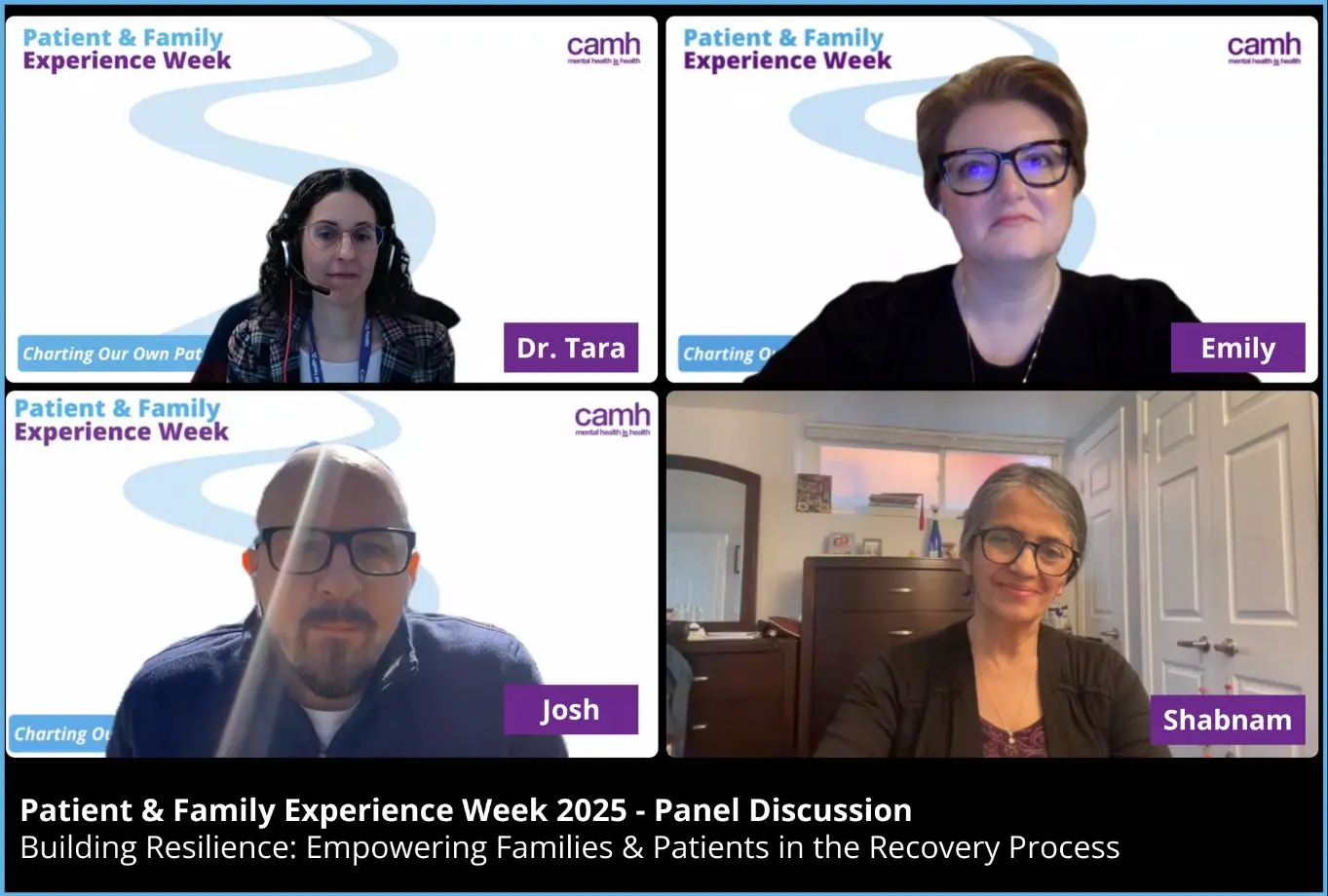
During CAMH Patient and Family Experience Week, I joined a panel called “Building Resilience: Empowering Families and Patients in the Recovery Process.” The title brought together two words—empowerment and resilience—that are often used as if they arrive naturally after hardship.
That has not been my experience.
For much of my health journey, I did not feel empowered. I felt managed, doubted and overwhelmed. Reclaiming my voice happened gradually, through therapy, storytelling, patient partnership and the difficult work of believing my own experience after years of being taught to question it.
Empowerment begins with agency
Empowerment is more than being invited into a room. It is knowing that what you say can influence what happens next.
For a patient, agency can be as immediate as understanding a care plan, asking a question without fear or having the right to say that an approach is not working. At a systems level, it means involving patients and families early enough to shape research, education and services—not asking them to endorse decisions already made.
When I began sharing my story publicly, I saw that lived experience could help other patients feel less alone and help clinicians see familiar situations differently. Pain became a source of insight. Invisibility became a reason to make systems look again.
Resilience is not “bouncing back”
I once understood resilience as endurance: push harder, keep smiling and return as quickly as possible to the person I had been before.
Now I see it differently. Resilience can mean adapting to a body with different limits. It can mean grieving a former life without treating the life that remains as lesser. It can mean asking for help, establishing boundaries and choosing a pace that makes recovery more sustainable.
Recovery and empowerment are not linear. Mine have arrived in waves, through advocacy, rest, connection and moments when someone listened closely enough to help me hear myself again.
What lived experience can teach
When I speak with medical learners, I talk about being labelled a hypochondriac even though I was a high achiever who desperately wanted to keep functioning.
The lesson is not that every unexplained symptom points to one particular rare condition. It is that labels can close curiosity too early. A patient whose symptoms fluctuate may look well on one day and be unable to function on another. Someone who returns repeatedly may not be seeking attention; they may be trying to communicate a pattern no one has yet understood.
Listening does not require a clinician to abandon clinical judgment. It asks them to remain curious, explain their reasoning and treat the patient’s account as relevant evidence.
Care is part of empowerment
Self-care is often reduced to products or pleasant routines. I enjoy candles, journaling and small rituals, but the self-care that sustains me is structural.
It is building rest into my schedule. It is declining commitments that exceed my capacity. It is asking for support before I am in crisis. It is learning that independence does not mean doing everything alone.
Empowerment may begin with finding a voice, but community helps keep that voice from being lost again.
A different kind of strength
I am grateful to CAMH for creating space where patients and families can speak about recovery in their own words. These conversations remind us that compassionate systems are not built only through policy. They are built in the quality of listening, the language used in a clinical note and the willingness to share power.
Resilience did not return me to the person I was before illness. It helped me become someone more honest about what I need, and more determined to help build care in which other people can be honest too.